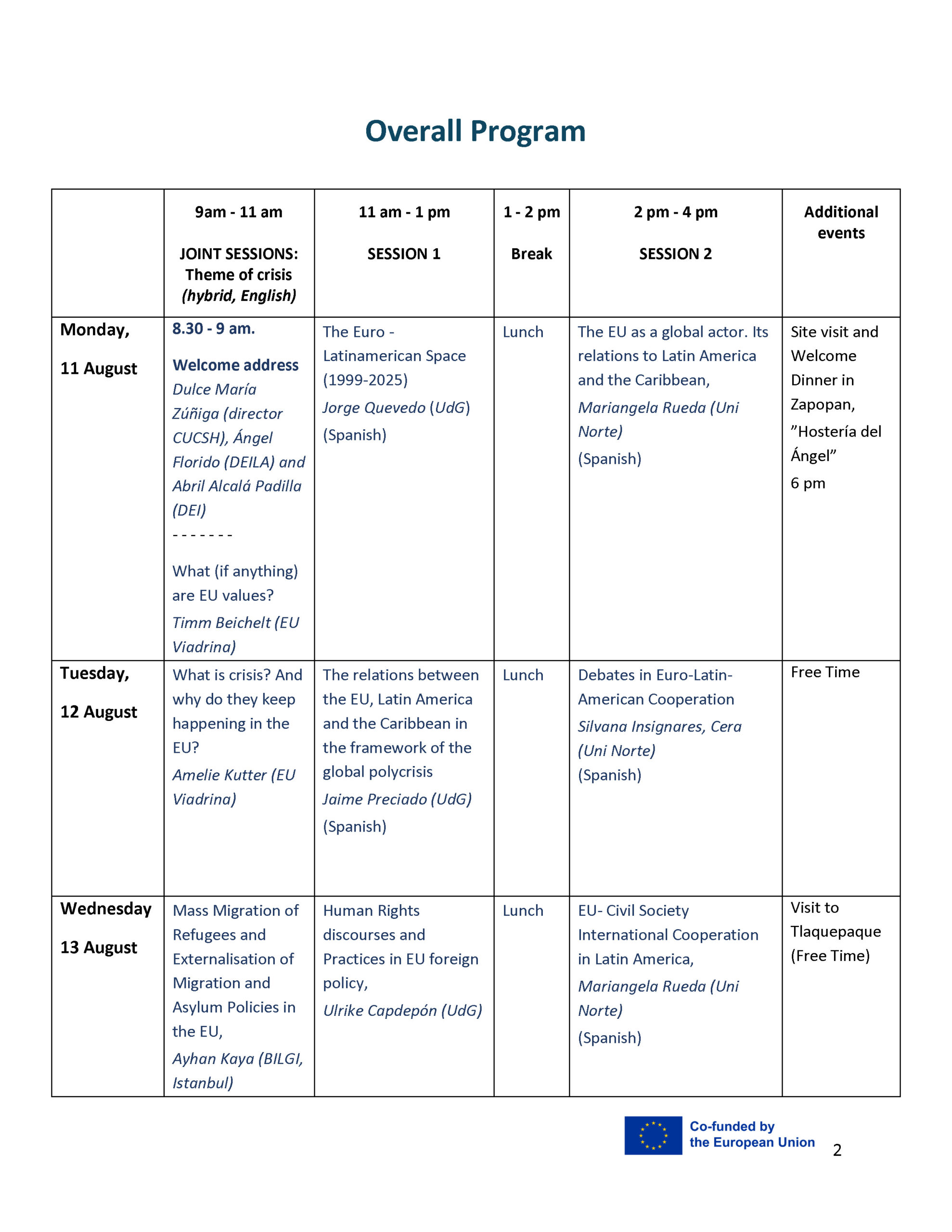
Session 1 — The Euro-Latinamerican Space (1999-2025)
Lecturer: Jorge Quevedo
This session introduces to the European Union (EU)-Latin America and the Caribbean (LAC) relations over the last twenty-six years.
Session 2 — The EU as a Global Actor and Its Relationship with Civil Society: A View from Latin America. 1
Lecturer: Mariangela Rueda Fiorentino
This session explores the European Union (EU) as a global actor with a focus on its role in international development cooperation and its efforts to cooperate with civil society as a key partner.
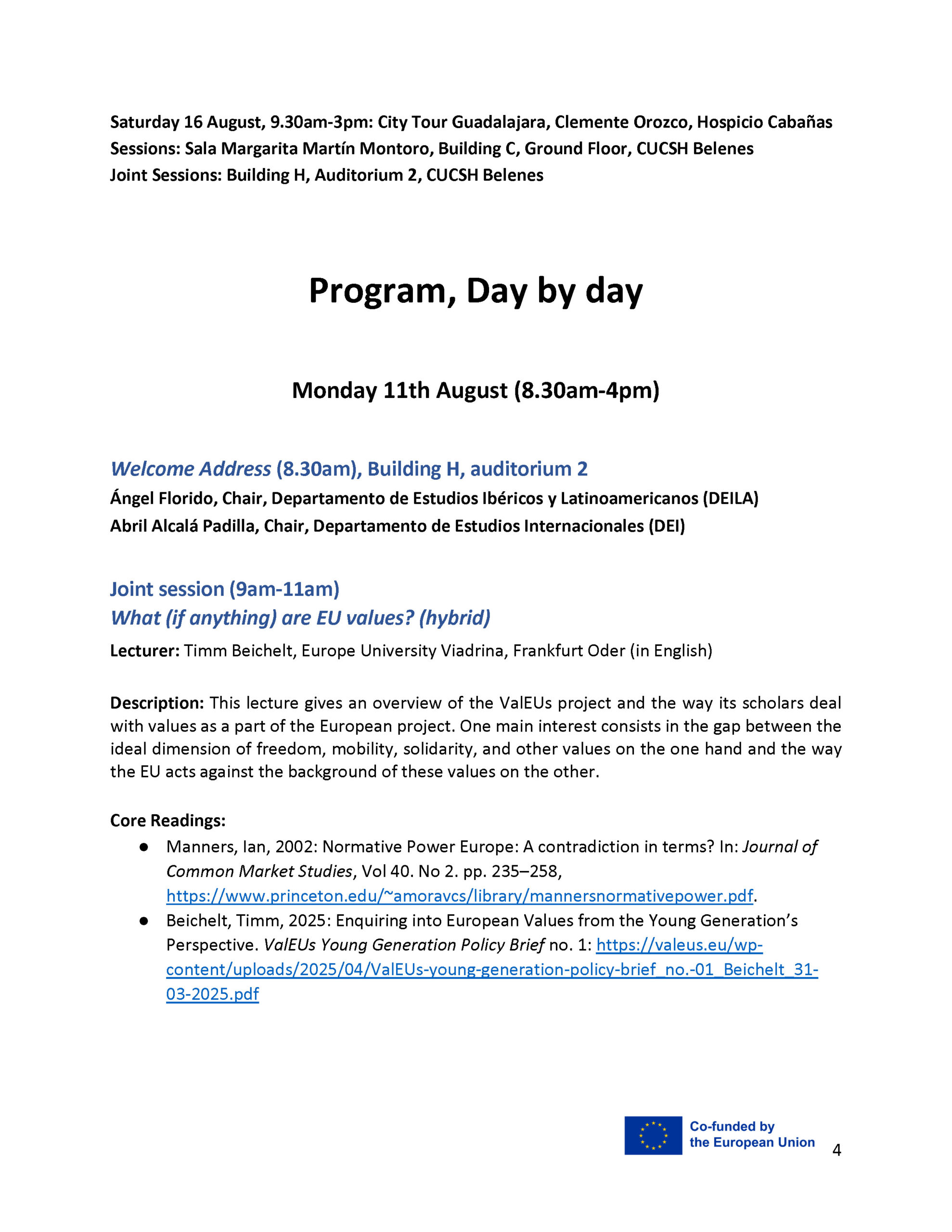
Joint Session — What (if anything) are EU values?
Lecturer: Timm Beichelt
Introduction to the ValEUs approach to European values and the gap between ideals and practice.
Session 1 — Relations between the European Union, Latin America and the Caribbean amid global poly-crisis
Lecturer: Jaime Preciado Coronado
In a world marked by poly-crisis – with geopolitical tensions, multilateral collapse and climate urgency – relations between the European Union (EU) and Latin America and the Caribbean (LAC) have become more strategic than ever.
Session 2 — Debates in Euro-Latin American cooperation
Lecturer: Silvana Insignares Cera
The European Union’s trade agreements are part of its Common Commercial Policy, conceived as a tool for projecting its democratic values and principles beyond its borders.
Joint Session — Europe in ‘Polycrisis’
Lecturer: Amelie Kutter (EUV)
Understanding Europe’s overlapping crises and their impact on political and institutional transformation.
Session 1 — Human Rights Discourses and Practices in EU Foreign Policy towards Latin America
Lecturer: Ulrike Capdepón
Taking the basis of compartive regionalism and Eurocentric critique as a starting point, this session focuses on values and norms in EU-Latin America Relations that are increasingly contested by international, local civil society actors and academic discourses from global south countries.
Session 2 — EU-Civil Society International Cooperation in Latin America 2
Lecturer: Mariangela Rueda Fiorentino
This session explores the European Union (EU) as a global actor with a focus on its role in international development cooperation and its efforts to cooperate with civil society as a key partner.
Joint Session — Mass Migration & Externalisation of EU Migration Policy
Lecturer: Ayhan Kaya (BİLGİ)
Analysis of human mobility from the Middle East and the EU–Turkey Refugee Deal.
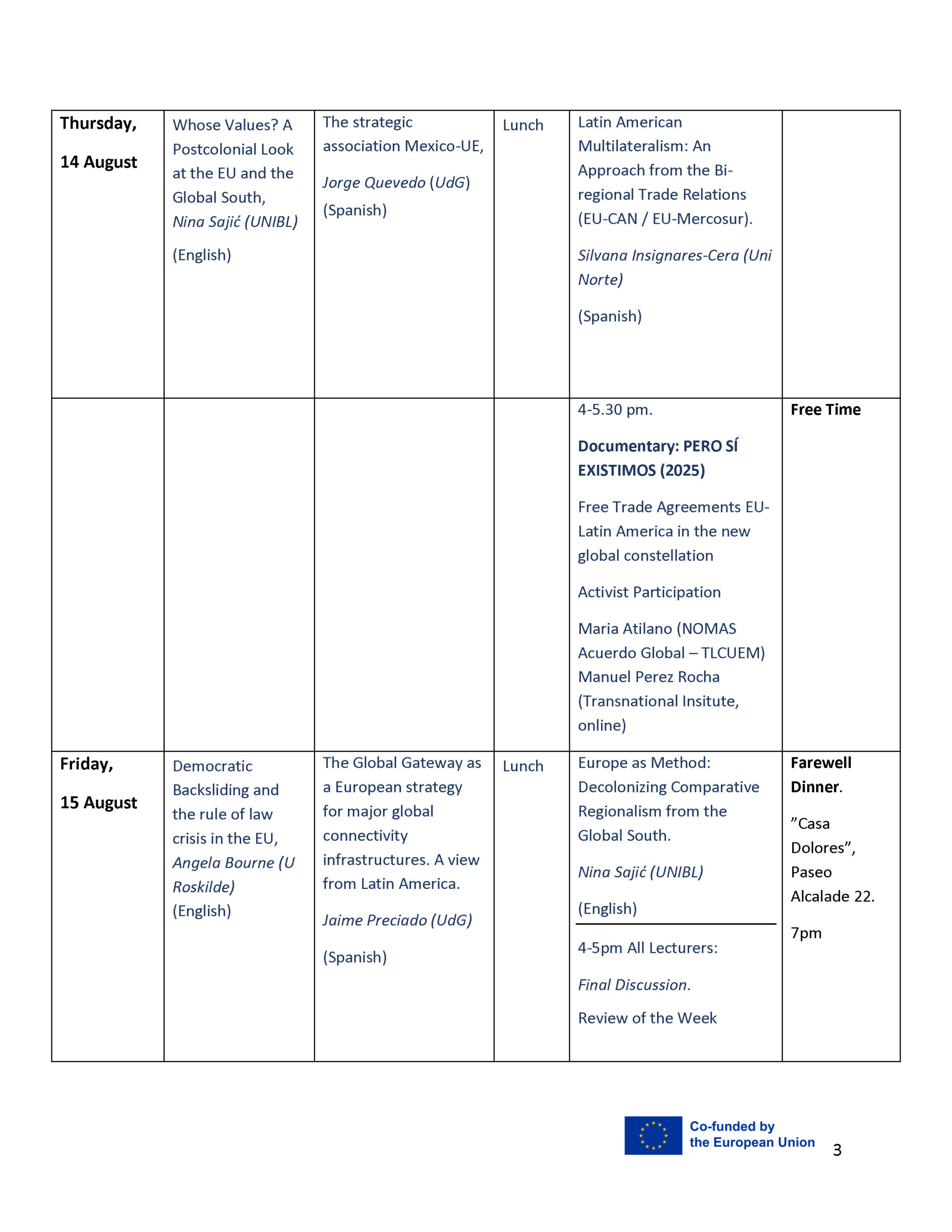
Sessions 1 — The Strategic Association México-UE
Lecturer: Jorge Quevedo
This session analyses the development of the strategic partnership between the European Union and Mexico over the past sixteen years.
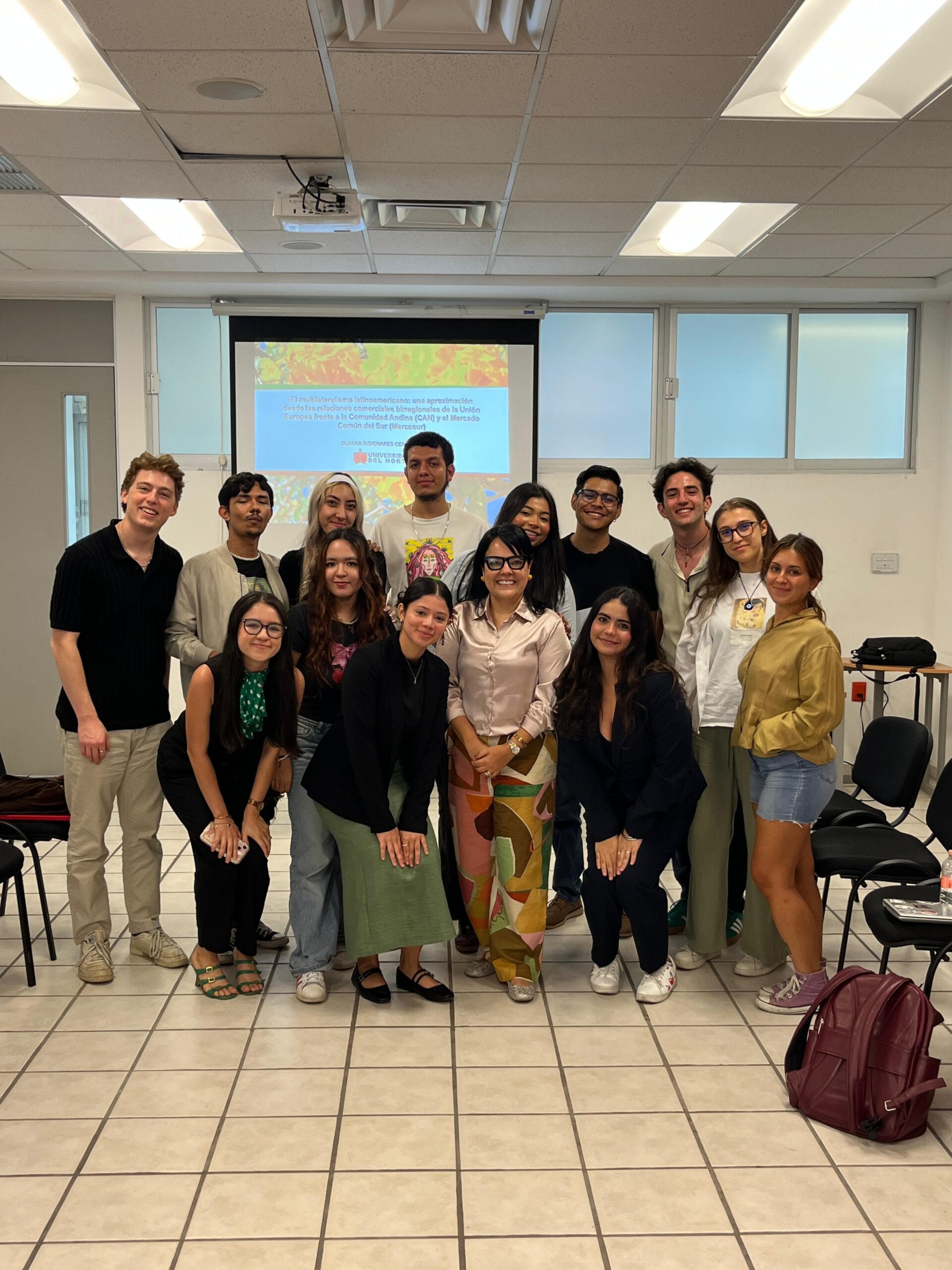
Sessions 2 — Latin American Multilateralism: An Approach from the Bi-regional Trade Relations (EU-CAN / EU-Mercosur).
Lecturer: Silvana Insignares-Cera
Multilateralism is at the bas of the contemporary international order in the context of relations between Latin America and the European Union, it has acquired a strategic dimension through bi-regional cooperation and trade schemes.
Joint Session — Whose Values? A Postcolonial Look at the EU and the Global South
Lecturer: Nina Sajić (UNIBL)
A postcolonial perspective on EU universalism and emerging alternative visions from the Global South.
Session 1 — The Global Gateway as a European strategy for major global connectivity infrastructures. A view from Latin America.
Lecturer: Jaime Preciado
The Global Gateway strategy, launched by the European Union in December 2021 with a budget of up to 300 billion Euro for 2021-2027, is positioned as a key tool to strengthen global connectivity through green, digital and social investments.
Session 2 — Europe as Method: Decolonizing Comparative Regionalism from the Global South.
Lecturer: Nina Sajić, UNIBL
This lecture explores how “Europe” has shaped the very method of comparative regionalism, often casting regions like Latin America, Africa, or Southeast Asia as incomplete or derivative.
Joint Session — Democratic Backsliding and the Rule of Law Crisis in the EU
Lecturer: Angela Bourne (RUC)
Examination of democratic backsliding in EU member states and institutional responses.